Paper Harvest Report
Date range: June 01, 2026
6 top-tier papers selected out of 89 total publications
Today’s Highlights
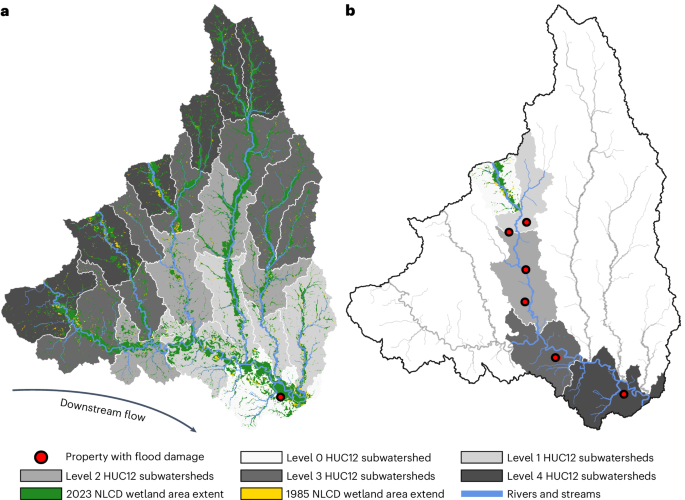
Tropical cyclone–induced storm surges have increased 20% globally since 1982, with poleward cyclone migration identified as the key driver amplifying surge risk in both hemispheres (PNAS). A Nature Water study quantifies the economic value of US wetlands in buffering riverine flood losses, providing a critical framework for nature-based flood management policy. In paleohydrology, new seismic and topographic data reveal the Late Miocene Euphrates River drained into a partially desiccated Mediterranean — with palaeo-discharge exceeding the combined modern Tigris, Euphrates, and Nile rivers — before tectonic avulsion redirected it to form today’s river system (Nature Geoscience).
Table of Contents
- Today’s Highlights
- Top-Tier Journal Papers
- The economic value of wetlands in reducing riverine flood losses in the USA
- Lake sediment heatwaves under global warming
- Late Miocene Euphrates River drained into a partially desiccated eastern Mediterranean
- Enhanced global storm surges by tropical cyclone poleward migration
- Impacts of future sea level change on Greenland from community knowledge, coastal mapping, and glacial isostatic adjustment models
- Anomalous Westerly Shifts in the Medieval Warm Period Disrupted Centennial East Asian Winter‐summer Monsoon Synchrony Since 2500 BP
- Statistics
- Filtering Criteria
Top-Tier Journal Papers
The economic value of wetlands in reducing riverine flood losses in the USA
Authors: Jesse D. Gourevitch, Adam C. Gold, Helena M. Garcia
Journal: Nature Water · DOI: 10.1038/s44221-026-00656-3
Matched topics: river, flood
Abstract not available.
Lake sediment heatwaves under global warming
Authors: R. Iestyn Woolway, Haoran Shi, Zeli Tan, Joachim Jansen
Journal: Nature Geoscience · DOI: 10.1038/s41561-026-01986-3
Matched topics: seasonal
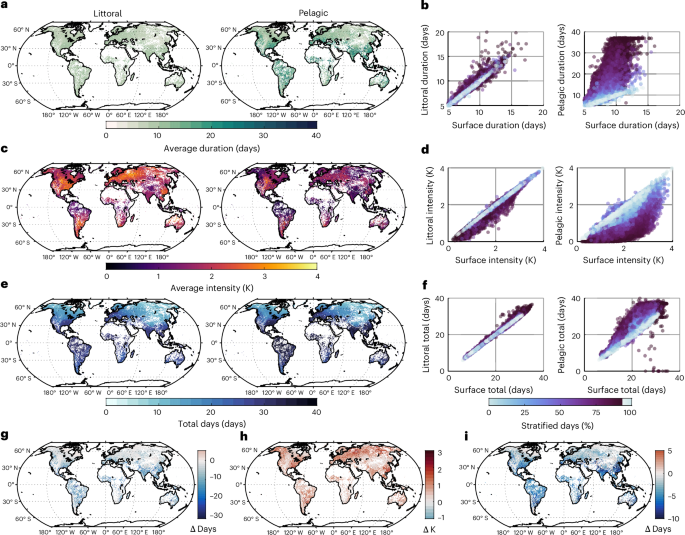
Lake sediment heatwaves, driven by rising global temperatures, pose emerging threats to freshwater ecosystems by altering sediment thermal regimes and intensifying sediment biogeochemical processes. Here we present a global-scale assessment of lake sediment heatwaves, examining their historical patterns and projecting future trends under various climate scenarios in 41,499 representative lakes worldwide. Using daily simulated lake sediment temperatures from 1981 to 2010 and future (2071–2100) projections under three Shared Socioeconomic Pathways (SSP 1–2.6, SSP 3–7.0, SSP 5–8.5), we investigate lake sediment heatwave characteristics, including their duration, intensity, frequency and seasonal timing worldwide. Our results show that lake sediment heatwaves are generally more persistent and frequent than lake surface heatwaves, with sediment heatwaves in pelagic regions experiencing a notable lag relative to surface conditions. Under future climate scenarios, sediment heatwaves are projected to intensify, with their duration and frequency increasing substantially, particularly under SSP 5–8.5. These shifts could exacerbate the production of greenhouse gases such as methane and increase sediment respiration rates in lakes. This study highlights the need to account for sediment heatwaves in freshwater ecosystem management and climate adaptation strategies to mitigate future impacts.
Late Miocene Euphrates River drained into a partially desiccated eastern Mediterranean
Authors: Andrew S. Madof, Fabien J. Laugier, Sarah E. Baumgardner, Abdallah S. Zaki, Elise J. Laugier, Claudia Bertoni, Richard T. Walker et al.
Journal: Nature Geoscience · DOI: 10.1038/s41561-026-01962-x
Matched topics: river
Although the Euphrates River—stretching ~3,000 km across Western Asia—has shaped the region’s geology for millions of years, the timing of its origin and the evolution of its course remain enigmatic. So far, two contrasting hypotheses have been proposed to explain the fluvial system’s Late Neogene path: termination in Anatolia at a palaeo-lake or the Mediterranean, or a southeastward continuation to Arabia. Here we use seismic-reflection and topographic data to show that two previously identified sedimentary accumulations—deposited during the terminal phase of the Late Miocene Messinian salinity crisis—resulted from dual riverine systems that drained into a partially desiccated eastern Mediterranean before avulsing toward the Persian Gulf and converging to form the modern Euphrates River. From probabilistic sediment-budget modelling, we show that although the latest Messinian drainage basins were an order of magnitude smaller than their present-day extents, the total palaeo-discharge exceeded that of the modern Tigris, Euphrates and Nile rivers combined, indicating intense palaeo-precipitation and high palaeo-relief. These results suggest that plate-margin deformation both controlled the fluvial avulsions that diverted the Euphrates River from the Anatolian–Eurasian Plate to the Arabian Plate, and established the conditions necessary for the development of the alluvial Fertile Crescent.
Enhanced global storm surges by tropical cyclone poleward migration
Authors: Yi-Peng Guo, Zhe-Min Tan
Journal: Proceedings of the National Academy of Sciences · DOI: 10.1073/pnas.2535524123
Matched topics: flood, coastal
Tropical cyclone–induced storm surges pose significant and growing threats to coastal regions; however, their long-term evolution in response to changing tropical cyclone characteristics remains poorly quantified. Here, by conducting a comprehensive global analysis, we find that tropical cyclone–induced storm surge has increased globally by 20% over the period 1982–2024, which is also statistically significant in both hemispheres. Notably, such increases are 28% over the western North Pacific, 38.2% over the eastern Pacific and 31% over the South Pacific, respectively. Through statistical decomposition, we identify the poleward migration of tropical cyclone activity as a key factor amplifying the storm surge in both hemispheres. Furthermore, the intensification of major tropical cyclones and increasing sizes of weak tropical cyclones also play important roles in enhancing storm surges across multiple basins. These changes in tropical cyclone activity, particularly the poleward migration, are largely related to human-induced global warming, underscoring the intrinsic link between tropical cyclone characteristics and associated surge risk under a changing climate. Our findings highlight the necessity of explicitly incorporating the evolving tropical cyclone activity into climate projections and provide a critical framework for assessing compound coastal flood risks in a warming world.
Impacts of future sea level change on Greenland from community knowledge, coastal mapping, and glacial isostatic adjustment models
Authors: Kirsty J. Tinto, Jacqueline Austermann, Robin E. Bell, David Blockley, Casey E. Brayton, Diana Krawczyk et al.
Journal: Proceedings of the National Academy of Sciences · DOI: 10.1073/pnas.2528615123
Matched topics: coastal
Making predictions of global change relevant to individual communities is a critical challenge, especially where local impacts diverge from global predictions. While sea level is rising globally, in Greenland, sea level is predicted to fall over the coming century due to land rebound and sea surface lowering, consequences of glacial isostatic adjustment from both past and future ice loss. Here we present results of a US and Greenland scientific partnership, working with the community of Aasiaat, West Greenland, to identify the impacts of future sea level change where sea level is projected to fall 0.41 to 0.93 m by 2100 CE. Through collaboratively designed, conducted, and interpreted multibeam bathymetry surveys combined with targeted glacial isostatic adjustment models, we identify areas that will be most impacted by sea level fall. We identify two shallow channels where disruption to navigation and nutrient cycles will occur when water level falls beneath critical depth thresholds. To make these predictions useful we established communication pathways to share findings effectively across a broad array of interest groups by engaging with community members, government officials, and students. This multipronged approach of collaboratively designed observations, locally targeted impact modeling and integrated formal and informal communication can be expanded to coastal communities facing environmental challenges around the world.
Anomalous Westerly Shifts in the Medieval Warm Period Disrupted Centennial East Asian Winter‐summer Monsoon Synchrony Since 2500 BP
Authors: Xiaochuan Ma, Lijian Yang, Hu Yang, Debo Zhao, Liang Ning, Tiantian Yu, Zhengpu Luo et al.
Journal: Geophysical Research Letters · DOI: 10.1029/2025gl121534
Matched topics: coastal, Holocene
Understanding past East Asian monsoon dynamics is crucial for projecting its responses to substantial climate forcing under future global warming scenarios. However, the relationship between East Asian Winter monsoon (EAWM) and summer monsoon (EASM) in the late Holocene remains under debate. Here, a 2500‐year high‐resolution record of EAWM intensity has been reconstructed based on the end‐members of core sediments from a coastal current system, suggesting a strengthening trend in the last 2500 years. The centennial variability of EAWM shows a predominant in‐phase coupling with EASM under ENSO forcing. The monsoons synchronously weakened during El Niño and strengthened during La Niña. This synchrony collapsed during the Medieval Warm Period under El Niño‐frequent conditions, when the monsoons shifted to be anti‐phased. This breakdown is attributed to the anomalously shifted westerlies that changed Atlantic inflow, furtherly modulating Eurasian temperatures and displacing the Siberian and Subtropical Highs, thereby altering winter monsoon intensity.
Statistics
| Metric | Count |
|---|---|
| Journals searched | 11 |
| Total papers fetched | 89 |
| Passed deterministic filter | 12 |
| After LLM relevance filtering | 6 |
| Rejected (not relevant) | 6 |
| AI for Science items picked | 0 |
Papers by journal
| Journal | Papers |
|---|---|
| Nature Geoscience | 2 |
| Nature Water | 1 |
| Proceedings of the National Academy of Sciences | 2 |
| Geophysical Research Letters | 1 |
Filtering Criteria
Topics: streamflow, river, runoff, flood, drought, reservoir, dam, irrigation, groundwater, aquifer, watershed, basin, hydrology, hydrological, water resources, water cycle, precipitation, evapotranspiration, soil moisture, snowmelt, glacier, ice sheet, sea level, coastal, estuary, ocean, climate change, land surface model, earth system model, remote sensing, machine learning, deep learning, Holocene, paleoclimate, paleohydrology, Quaternary, fluvial, geomorphology, seasonal
Fields: Environmental Science, Earth and Planetary Sciences, Geography, Geology, Oceanography, Atmospheric Science, Civil Engineering