Paper Harvest Report
Date range: July 27, 2026
7 top-tier papers selected out of 104 total publications
Today’s Highlights
California’s Sacramento Valley experienced an abrupt and largely invisible tipping point during the 2020–2022 extreme drought: InSAR-detected land subsidence accelerated into an irreversible, inelastic compaction regime that groundwater-level records alone could not have predicted, posing lasting threats to storage capacity and infrastructure. Across the Pacific, a Yellow River Basin study demonstrates that a fully integrated hydropower–photovoltaic–wind–pump system could displace nearly one-quarter of coal-fired electricity while simultaneously reducing water consumption and restoring ecosystem carbon—showing that multi-source renewable coordination need not come at hydrology’s expense. Bookending these water-resource findings, a hemispheric analysis of 724 Northern Hemisphere lakes warns that marginal warming beyond critical winter-temperature thresholds can trigger up to 22-fold jumps in ice-decay sensitivity, setting the stage for abrupt seasonal regime shifts by end-of-century.
Table of Contents
- Today’s Highlights
- Top-Tier Journal Papers
- Abrupt transition to irreversible damage in the overdrafted Sacramento Valley aquifer system
- Rapid acceleration of ice-cover loss from Northern Hemisphere lakes above critical air temperature thresholds
- Orographic Effects on Precipitation From Hurricane Helene
- Canopy-mediated climate feedbacks in the boreal continuous permafrost zone
- The saline groundwater legacy of a large buried coastal paleo-estuary
- Balancing energy, water, and ecology through renewable energy transitions in the Yellow River Basin
- Microbial drought resistance is achieved at the expense of soil carbon loss
- AI for Science
- Statistics
- Filtering Criteria
Top-Tier Journal Papers
Abrupt transition to irreversible damage in the overdrafted Sacramento Valley aquifer system
Authors: Stacy Larochelle, Kristel Chanard, Manon Dalaison, Jérôme Fortin, Romain Jolivet, Laurent Longuevergne, et al.
Journal: Proceedings of the National Academy of Sciences · DOI: 10.1073/pnas.2526041123
Matched topics: drought, water management
Groundwater extraction decreases water pressure in aquifer systems, causing reversible or irreversible deformation of the water-bearing layers that manifests as recoverable or permanent displacements of the land surface, respectively. Detecting and forecasting when and where an aquifer system transitions from a reversible, poroelastic regime, to an irreversible, inelastic regime remains a crucial challenge given the complex, heterogeneous nature of aquifer systems. Here we leverage high-resolution measurements of ground deformation and groundwater levels from 2016 to 2022 to characterize both regimes at the regional scale and show that a critical transition occurred in large areas of the Sacramento Valley during California’s 2020-2022 extreme drought. Our analysis reveals that, while deformation remained primarily poroelastic during the 2016-2020 interdrought period, land subsidence in areas of intense groundwater extraction accelerated abruptly in 2021, with subsidence rates exceeding the inferred poroelastic rates by several decimeters per year. Such rapid and extensive land subsidence indicates severe inelastic compaction and loss of storage capacity of the underlying aquifer system, which pose a serious threat to California’s water resources and infrastructure. A comparison of present-day deformation with historical groundwater levels reveals that this abrupt transition was not predictable based on the available groundwater records alone.
Rapid acceleration of ice-cover loss from Northern Hemisphere lakes above critical air temperature thresholds
Authors: Jian Zhou, Weijia Wang, Yaru Ma, Linwang Yuan, Changchun Huang, Kun Shi, Peter R. Leavitt
Journal: Proceedings of the National Academy of Sciences · DOI: 10.1073/pnas.2610752123
Matched topics: seasonal, climate change
Widespread declines in lake-ice cover are a hallmark of climate warming, yet the dynamic sensitivity of ice cover to thermal forcing remains poorly understood across broad climatic gradients. By analyzing an extensive dataset from 724 Northern Hemisphere lakes between 2000 and 2022, we quantify the responsiveness of lake-ice phenology to changes in air temperature and project their future trajectories. Our hemispheric analysis reveals a pronounced asymmetrical sensitivity where ice-decay processes are significantly more responsive to warming than ice-formation events. We identify critical thermal threshold of mean winter air temperature ranging from -13.7 to -6.8 °C, beyond which phenological sensitivity accelerates nonlinearly. Once these winter temperature breakpoints are surpassed, the sensitivity of ice loss increases by up to 22-fold, signaling a threshold-dependent collapse of the seasonal ice cycle. These threshold-dependent responses are primarily driven by broad-scale thermal and radiative regimes, particularly winter air temperature and surface albedo, rather than localized lake morphology. Future projections indicate that under high-emission scenarios, ice-cover duration will contract by approximately 40 days, and the proportion of lakes crossing critical thermal thresholds and entering a state of accelerated phenological sensitivity is expected to rise from 23 to 70% by the end of the century. These findings suggest that many temperate and southern boreal lakes are nearing a state of heightened vulnerability where marginal warming will trigger abrupt and potentially irreversible ecological shifts.
Orographic Effects on Precipitation From Hurricane Helene
Authors: Emily Bercos-Hickey, Naser Mahfouz, Hassan Beydoun, Noel D. Keen, Christina M. Patricola-DiRosario, Mark D. Risser, Walter M. Hannah
Journal: Geophysical Research Letters · DOI: 10.1029/2025gl121382
Matched topics: flood, river routing
Hurricane Helene was deadly and destructive, with orographically driven precipitation in the Appalachians contributing to historic rainfall and flooding. Here, we quantify the orographic effects on precipitation from Hurricane Helene using a novel set of global, cloud-resolving simulations with and without the Appalachian Mountains using the Simple Cloud-Resolving E3SM Atmosphere Model (SCREAM). We found that the Appalachians redistributed tropical cyclone precipitation, producing over 300 mm more upslope rainfall driven by enhanced vertical motion, while suppressing leeward rainfall through reduced condensation and accretion. The pathways to precipitation formation are similar in both simulations: cloud condensate primarily forms from vapor to liquid water condensation, and accretion is the main rain formation mechanism. On the windward side, orography enhances these mechanisms through a seeder-feeder-like process, with higher precipitation efficiency indicating that the mountains produce a more efficient storm with respect to converting available moisture into surface rainfall.
Canopy-mediated climate feedbacks in the boreal continuous permafrost zone
Authors: S. M. Stuenzi, G. Grosse, F. Miesner, S. Westermann, M. Langer
Journal: Nature Climate Change · DOI: 10.1038/s41558-026-02692-z
Matched topics: land surface model, seasonal, climate change
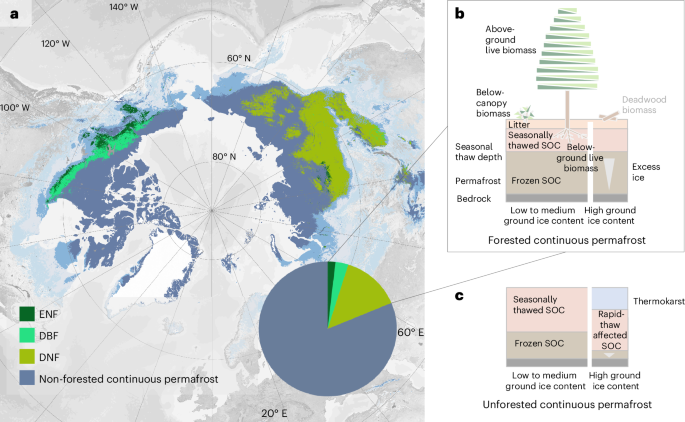
Boreal forests, covering approximately a quarter of the continuous permafrost zone, store relatively modest aboveground carbon, but thermally protect vast soil organic carbon (SOC) pools. Here, using a process-based model to compare seasonal thaw depths under forested and bare-ground scenarios, we quantify distinct canopy thermal insulation capacities of deciduous needleleaf, evergreen needleleaf and deciduous broadleaf canopies on permafrost thermal dynamics. Canopy buffering maintains approximately 59 Pg of carbon in a frozen state, which equals 32% of the total forested permafrost carbon pool and far exceeds boreal biomass stocks (7–19 Pg). Canopy changes could mobilize this frozen SOC through gradual thaw (40 Pg) and rapid thermokarst collapse (19 Pg). While forest loss sacrifices biomass carbon stocks, resulting thaw would expose orders of magnitude more SOC from previously frozen reservoirs, revealing a critical asymmetry. Forest conservation strategies in continuous permafrost zones must account for canopy-mediated thermal protection of frozen SOC, which far exceeds its biomass carbon sequestration capacity.
The saline groundwater legacy of a large buried coastal paleo-estuary
Authors: Burke J. Minsley, Holly A. Michael, Maxwell A. Lindaman, Lyndsay B. Ball, Stephanie R. James, JR Rigby, Wade H. Kress, Frank T.-C. Tsai, Bennett E. Hoogenboom
Journal: Nature Communications · DOI: 10.1038/s41467-026-76005-5
Matched topics: river, water management, estuary, coastal, Pleistocene
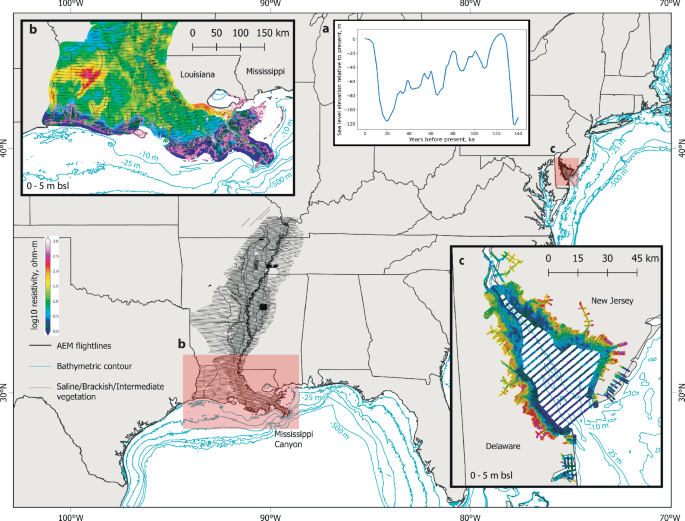
Elevated groundwater salinity in coastal regions threatens the beneficial use of fresh groundwater. Coastal groundwater management typically focuses on preventing intrusion from modern sources of seawater; however, past geological processes can also leave a legacy of saline groundwater now hidden in the subsurface. Here, multiple extensive airborne electromagnetic surveys provide detailed evidence of residual salinity from a paleo-estuary filling a late Pleistocene incised valley impacting more than 10,000 km² that is now hidden beneath coastal Louisiana’s deltaic plain. Our results show that the three-dimensional pattern of saline groundwater beneath Louisiana mimics that of near-surface aquifers surrounding the modern Delaware Bay estuary, fingerprinting the signature of the past drowning of a large, incised valley of the Mississippi River following post-glacial sea-level rise. These findings demonstrate a new framework for understanding legacy sources of saltwater critical for managing stressed water resources along global coastlines.
Balancing energy, water, and ecology through renewable energy transitions in the Yellow River Basin
Authors: Chuandong Wu, Dawen Yang, Ximing Cai, Deliang Chen, Yuting Yang, Taihua Wang, Yi Zhang, Jianshi Zhao, Bojie Fu
Journal: Nature Communications · DOI: 10.1038/s41467-026-76078-2
Matched topics: river, hydropower, water management
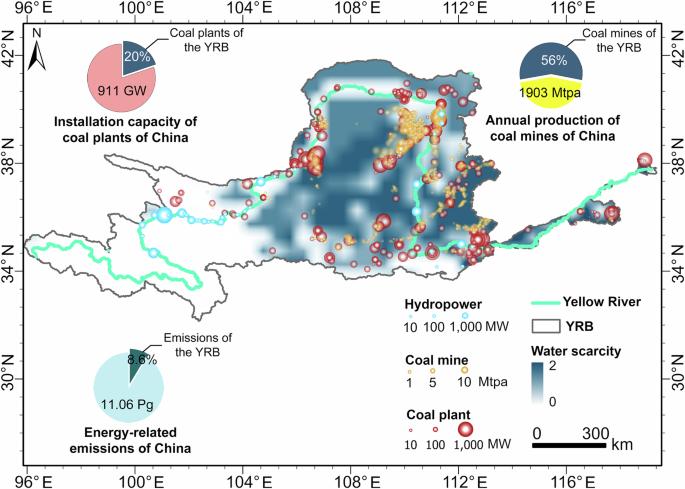
The transition to renewable energy for climate mitigation often involves trade-offs with regional priorities, owing to resource competition and potential ecological impacts. Addressing these challenges requires a holistic strategy. This study examines the potential of Hydropower–Photovoltaic–Wind–Pump renewable energy base (HPWP-base) in the Yellow River Basin in China—a region facing significant sustainability pressures, to balance energy, water, and ecology. Annually, the HPWP-base could replace 23.8% (249.4 tera watt hours) of coal-fired electricity generation. Such a basin-wide transition enables 28.0% reduction in energy-related emissions, 31.5% decline in electricity-sector water consumption, and 9.0% restoration of ecosystem carbon storage. These synergistic outcomes, attained through established technologies (pump and storage hydropower, basin-wide cooperation, and grid expansion), show the practicality of the HPWP-base. Therefore, it can serve as a solution to accelerate regional electricity transformation while advancing sustainable development, and enable policymakers to appreciate how to link renewable energy transition with multiple sustainable goals.
Microbial drought resistance is achieved at the expense of soil carbon loss
Authors: Xuesen Pang, Chengjie Ren, Nianpeng He, Xinyi Zhang, Yanghui He, Zhenghu Zhou
Journal: Nature Communications · DOI: 10.1038/s41467-026-76033-1
Matched topics: drought, land surface model
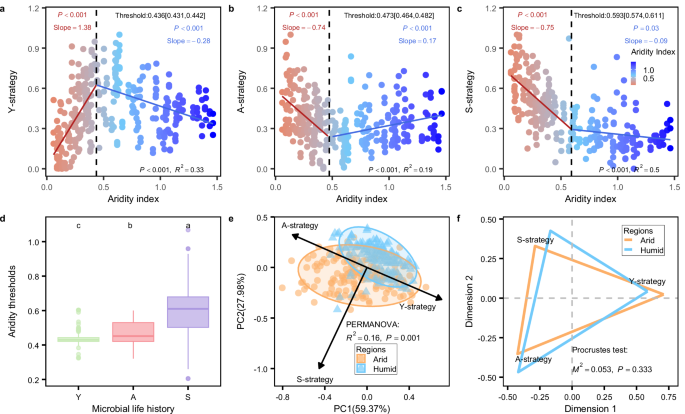
Life history strategies of soil microbiomes may determine their environmental adaptability and influence soil carbon-climate feedbacks. Here, we investigate trade-offs among microbial high yield (Y), resource acquisition (A), and stress tolerance (S) strategies and their consequences for soil carbon mineralization potential along an aridity gradient spanning 9.6 million square kilometers. Y-A-S strategies show nonlinear threshold responses to aridity, where a surge in S- and A-strategies and a sharp decline in Y-strategy occur once aridity exceeds critical levels. The aridity threshold for the Y-strategy occurs after those of S- and A-strategies, as increasing carbon allocation into stress tolerance and resource acquisition comes at the expense of growth. The Y-strategy negatively impacts, while A- and S-strategies positively impact soil carbon mineralization potential. Importantly, aridification intensifies these impacts. Overall, our findings suggest that variations in microbial Y-A-S strategies significantly influence soil carbon cycling and should be considered in microbial models. This study shows that soil microbes adapt to aridity by shifting their yield, resource acquisition and stress tolerance strategies, and that aridification amplifies the effects of these strategies on soil carbon mineralization.
AI for Science
How AI is changing research
- Want to get more from AI? Treat every prompt like an experiment (Nature, 2026-08-04) — Nature’s practical guide to iterative prompt design, testing variations systematically before scaling, mirrors good experimental design practice — directly transferable to any researcher integrating LLMs into scientific workflows.
Cross-discipline sparks
- Why the Legendary Erdős Problems Are Falling to AI (Quanta, 2026-08-03) — AI systems are cracking decades-old combinatorics and graph-theory conjectures via exhaustive search and automated proof verification. Earth-science angle: river network topology, flow accumulation routing, and optimal reservoir / irrigation-canal placement are fundamentally graph-optimization problems. Techniques now automating combinatorial proof search could be adapted for large-scale river-network analysis or multi-reservoir dispatch scheduling — work a small hydrology team could prototype with off-the-shelf graph-AI tools.
Statistics
| Metric | Count |
|---|---|
| Journals searched | 11 |
| Total papers fetched | 104 |
| Passed deterministic filter | 16 |
| After LLM relevance filtering | 7 |
| Rejected (not relevant) | 9 |
| AI for Science items picked | 2 |
Papers by journal
| Journal | Papers |
|---|---|
| Proceedings of the National Academy of Sciences | 2 |
| Nature Communications | 3 |
| Nature Climate Change | 1 |
| Geophysical Research Letters | 1 |
Filtering Criteria
Topics: hydrology, hydrologic model, river, runoff, streamflow, reservoir, water management, flood, drought, seasonal, land surface model, climate change, hydropower, surface water, irrigation, earth system model, estuary, coastal, freshwater discharge, river plume, ocean biogeochemistry, marine heatwave, paleohydrology, paleoclimate, Quaternary, Holocene, Pleistocene, fluvial geomorphology, river terrace, loess, drainage network, river capture, landscape evolution, luminescence dating
Fields: engineering, environmental science, computer science, geology, geography