Paper Harvest Report
Date range: August 26, 2026
4 top-tier papers selected out of 117 total publications
Today’s Highlights
A new 1,200-year paleoclimate synthesis spanning 850 CE to present finds that today’s globally synchronous seasonal warm events are unprecedented in both spatial extent and magnitude, placing modern greenhouse-gas forcing in a league of its own. Complementary work traces how 19th-century volcanic eruptions temporarily mimicked this disruption of Pacific–Indian Ocean coupling, underscoring how far current anthropogenic perturbations exceed any historical analog. On the biogeochemical front, a critical-zone study of natural basaltic systems reveals that soil processes cap the alkalinity export thought to underpin enhanced-weathering carbon-removal strategies, with direct implications for how we parameterize weathering fluxes in earth-system models.
Table of Contents
Top-Tier Journal Papers
Critical zone processes limit alkalinity export from natural basaltic systems
Authors: L. A. Derry, K. Maher, O. A. Chadwick
Journal: Nature · DOI: 10.1038/s41586-026-10936-3
Matched topics: river
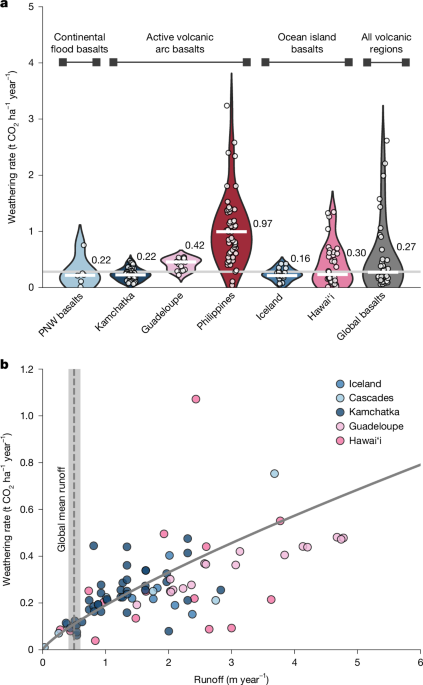
Enhanced weathering (EW) of rocks is a proposed strategy for carbon dioxide removal (CDR) that relies on the dissolution of silicate minerals, typically basalt, applied to soils. Globally, large-scale CDR by means of EW requires the generation of alkalinity during mineral dissolution in soils and percolation of this alkalinity through the critical zone into rivers and, ultimately, the ocean. Here we show that natural basaltic systems provide important constraints on the potential for EW. Critical zone processes — including secondary mineral formation and cation exchange — limit alkalinity export from soils to rivers, with significant implications for how enhanced weathering should be modeled and deployed as a carbon-removal strategy.
Recent globally synchronous seasonal warm events unprecedented since 850 CE
Authors: Jianping Duan, Fengqi Hao, Yixuan Zhou, Shaoteng Chen, Anqi Wang, Cunde Xiao et al.
Journal: Nature Communications · DOI: 10.1038/s41467-026-76985-4
Matched topics: seasonal
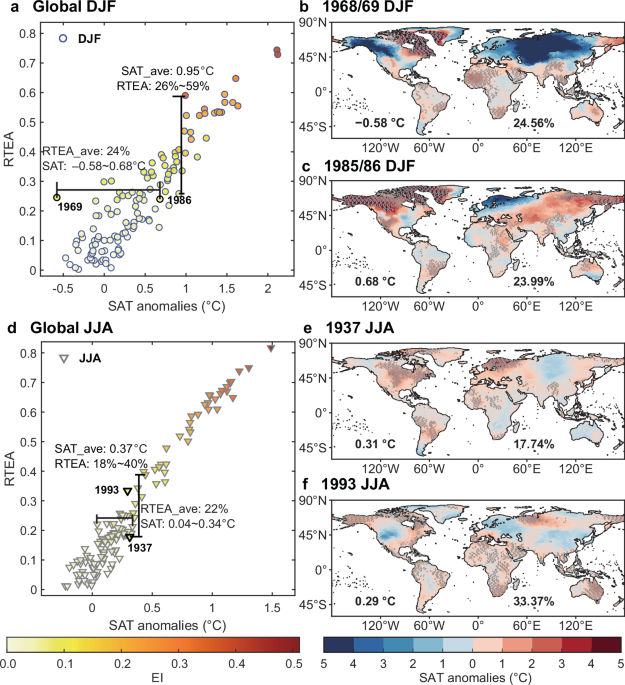
Spatially synchronous extreme warm events can amplify environmental and societal impacts by affecting multiple regions simultaneously. However, previous studies have largely focused on June–August (JJA) events during the instrumental period, limiting understanding of their seasonal prevalence and long-term historical context. Here we use a multi-proxy paleoclimate reconstruction spanning 850 CE to present to show that recent globally synchronous seasonal warm events are unprecedented in the past 1,200 years. The synchrony, intensity, and spatial extent of modern warm events far exceed those of any pre-industrial period, pointing to anthropogenic greenhouse gas forcing as a distinct and novel driver of correlated regional climate extremes.
Coupling of Pacific and Indian Ocean variability disrupted by 19th century volcanism
Authors: Shawn Wang, Delia W. Oppo, Caroline C. Ummenhofer
Journal: Nature Communications · DOI: 10.1038/s41467-026-76705-y
Matched topics: paleoclimate
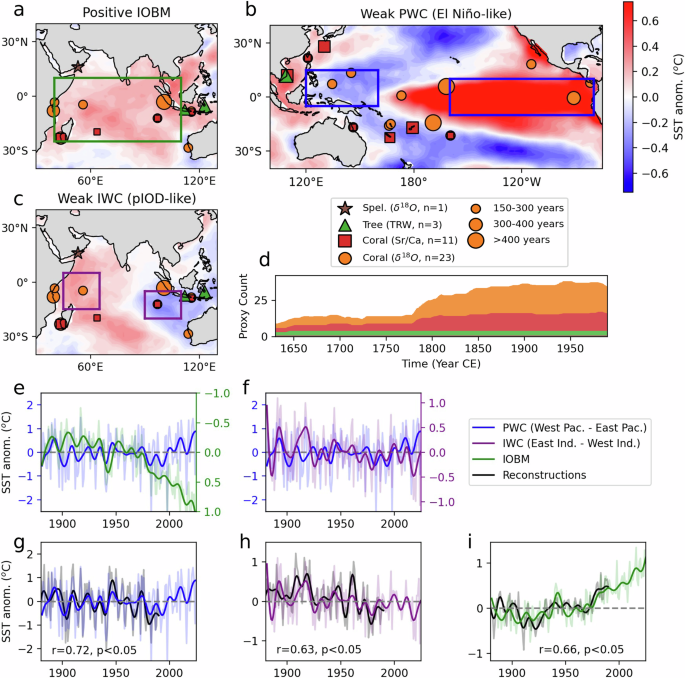
Through tropical basin interactions, the Indian Ocean Walker circulation (IWC) and basin mode (IOBM) covary with the Pacific Walker circulation (PWC) on interannual-decadal timescales. Coupling between IOBM and PWC has degraded considerably in recent decades due to greenhouse gas forcing; however, the nature and causes of this decoupling remain unclear. Using paleoclimate proxy records, we show that a comparable disruption of Pacific–Indian Ocean coupling occurred following major 19th-century volcanic eruptions, which temporarily mimicked the thermal patterns now produced by greenhouse gases. These findings demonstrate that the current state of basin decoupling is unprecedented in the context of natural forcing alone and has profound implications for regional monsoon rainfall and associated river discharge across Asia and Africa.
How coastal resilience emerges
Authors: Authors not available
Journal: Nature Communications · DOI: 10.1038/s41467-026-76127-w
Matched topics: climate change, coastal
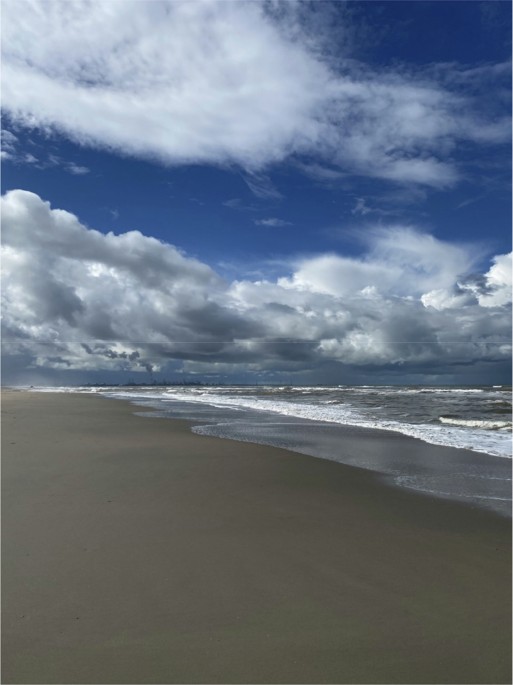
As climate change accelerates and pressures on coastal systems intensify, understanding coastal resilience is becoming as important as understanding the hazards themselves.
AI for Science
How AI is changing research
- Designing physics experiments with artificial intelligence (Nature, 2026-09-02) — AI autonomously searches vast spaces of hardware configurations and proposes entirely new experimental layouts in physics — a paradigm shift from AI as a parameter-tuner to AI as an experimental architect. For earth-science teams, the same approach could be adapted to optimize hydrologic monitoring network design: rather than manually deciding sensor placements, an AI agent could search the space of possible configurations to minimize uncertainty in streamflow or groundwater state estimation at scale.
Statistics
| Metric | Count |
|---|---|
| Journals searched | 11 |
| Total papers fetched | 117 |
| Passed deterministic filter | 6 |
| After LLM relevance filtering | 4 |
| Rejected (not relevant) | 2 |
| AI for Science items picked | 1 |
Papers by journal
| Journal | Papers |
|---|---|
| Nature | 1 |
| Nature Communications | 3 |
Filtering Criteria
Topics: hydrology, hydrologic model, river, runoff, streamflow, reservoir, water management, flood, drought, seasonal, land surface model, climate change, hydropower, surface water, irrigation, earth system model, estuary, coastal, freshwater discharge, river plume, ocean biogeochemistry, marine heatwave, paleohydrology, paleoclimate, Quaternary, Holocene, Pleistocene, fluvial geomorphology, river terrace, loess, drainage network, river capture, landscape evolution, luminescence dating
Fields: engineering, environmental science, computer science, geology, geography