Paper Harvest Report
Date range: October 30, 2026
3 top-tier papers selected out of 34 total publications
Today’s Highlights
A Nature Reviews perspective explores how open-weight large language models can be applied to investigate human-driven changes in the global hydrological cycle, signaling a new era of AI-assisted hydrology research. In Nature Climate Change, 100,000-year coupled Earth system model simulations reveal a surprising resilience of the East Antarctic ice sheet up to 10°C of warming, driven by atmospheric feedbacks — while the West Antarctic ice sheet disintegrates above 2°C. Meanwhile, a Geophysical Research Letters study demonstrates that a nonlinear combination mode of ENSO and seasonal cycles is the key to improving bimodal rainfall prediction over the Horn of Africa.
Table of Contents
Top-Tier Journal Papers
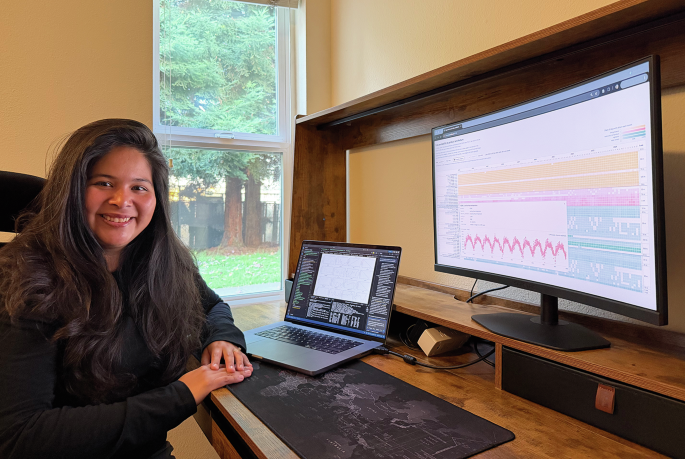
Using open-weight models to investigate human-driven changes in hydrology
Authors: Gabriela May Lagunes
Journal: Nature Reviews Earth & Environment · DOI: 10.1038/s43017-026-00856-1
Matched topics: hydrology
Abstract not available.
Atmospheric stabilization of the East Antarctic ice sheet under warming
Authors: Kyung-Sook Yun, Axel Timmermann
Journal: Nature Climate Change · DOI: 10.1038/s41558-026-02791-x
Matched topics: earth system model
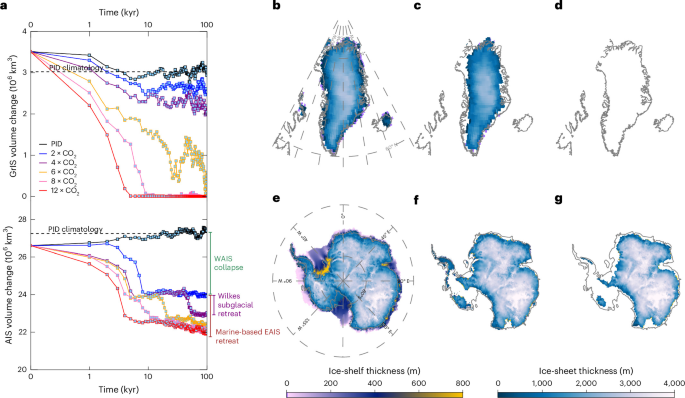
Most coupled Earth system models do not include fully interactive ice sheets, introducing uncertainty in future projections of polar climate and global sea level. To this end, we conduct 100,000-year-long simulations for different CO₂ conditions using the community Earth system model coupled to the bihemispheric Penn State University ice sheet–ice shelf model. Whereas global warming exceeding 2 °C above pre-industrial conditions and related subsurface ocean warming lead to the millennial-scale disintegration of the West Antarctic ice sheet, the East Antarctic ice sheet shows a much greater resilience, even at 10 °C or more of warming. The simulations reveal that a moister and cloudier atmosphere over Antarctica, with southward-shifted westerlies, increases snow accumulation and reduces shortwave radiation. For Greenland, a 6 °C threshold above pre-industrial levels is identified. Capturing the balance of ocean- and atmosphere-driven ablation and accumulation processes in coupled climate–ice-sheet models will improve projections of long-term sea-level rise.
Seasonal Modulation of ENSO Teleconnections to Horn of Africa Rainfall
Authors: Charles Yusuph Ntigwaza, Wenjun Zhang, Teng Zhang, Feng Jiang, Hyacinth Nnamchi
Journal: Geophysical Research Letters · DOI: 10.1029/2026gl123196
Matched topics: seasonal
Rainfall over the Horn of Africa (HoA) exhibits pronounced interannual variability linked to the El Niño–Southern Oscillation (ENSO). However, the seasonal evolution of ENSO-driven rainfall anomalies is not adequately explained by the ENSO, particularly the Niño3.4 index. The results here show that nonlinear interactions between ENSO and both semiannual and annual migration of the Intertropical Convergence Zone generate a combination mode (C-Mode) that modulates the timing and amplitude of the HoA regional rainfall. The C-Mode reproduces the rainfall variability during both the October–November–December and March–April–May rainy seasons, and captures statistically significant spectral peaks at combination frequencies near 1 and 2 years⁻¹. Regression and reconstruction analyses indicate that the inclusion of the C-Mode substantially improves representation of the bimodal rainfall response. These findings highlight the key role of ENSO–seasonal cycle in driving HoA rainfall variability and provide a physically-based pathway for the region’s improved seasonal prediction.
AI for Science
How AI is changing research
- These AI agents design your perfect robot-powered lab — and run it for you (Nature, 2026-11-06) — AI agents that collaboratively design experiments, configure robotic laboratory equipment, and autonomously execute experimental workflows signal a coming shift in high-throughput scientific discovery — with direct implications for automated environmental monitoring platforms and Earth-observation data pipelines.
Cross-discipline sparks
- AI can track a single bird over time—based solely on its song (Science, 2026-11-06) — The same passive-acoustic individual-identification framework could translate directly to hydrology: AI trained on streamflow acoustics from distributed hydrophone arrays could continuously track storm-event propagation, detect ice break-up onset, or characterize bedload transport — tasks that currently require expensive manual field surveys or stage sensors.
Statistics
| Metric | Count |
|---|---|
| Journals searched | 11 |
| Total papers fetched | 34 |
| Passed deterministic filter | 3 |
| After LLM relevance filtering | 3 |
| Rejected (not relevant) | 0 |
| AI for Science items picked | 2 |
Papers by journal
| Journal | Papers |
|---|---|
| Nature Reviews Earth & Environment | 1 |
| Nature Climate Change | 1 |
| Geophysical Research Letters | 1 |
Filtering Criteria
Topics: hydrology, hydrologic model, river, runoff, streamflow, reservoir, water management, flood, drought, seasonal, land surface model, climate change, hydropower, surface water, irrigation, earth system model, estuary, coastal, freshwater discharge, river plume, ocean biogeochemistry, marine heatwave, paleohydrology, paleoclimate, Quaternary, Holocene, Pleistocene, fluvial geomorphology, river terrace, loess, drainage network, river capture, landscape evolution, luminescence dating
Fields: engineering, environmental science, computer science, geology, geography